

free printable the guest house rumi pdf
Dive into Rumi's timeless wisdom! Download a free, printable PDF of 'The Guest House' poem. Find peace & inspiration with this beautiful piece – get your copy now!
The Enduring Appeal of Rumi’s Poetry
Jalāl ad-Dīn Muhammad Rūmī’s verses transcend centuries, offering profound wisdom. His poetry, especially “The Guest House,” resonates deeply with seekers of inner peace and understanding.
Legitimate Sources for Free PDFs
Finding a free printable PDF of Rumi’s “The Guest House” requires navigating a safe online landscape. Several reputable websites offer this poem legally and without cost. Project Gutenberg, a long-standing provider of free ebooks, often includes collections containing Rumi’s work, though formatting may vary.
Internet Archive is another excellent resource, archiving various editions and translations. Many university libraries also provide digitized collections, accessible with a free account. Websites dedicated to Sufi poetry and Rumi’s teachings frequently offer downloadable PDFs as part of their educational resources.
Poetry Foundation and Academy of American Poets sometimes feature Rumi’s poems, potentially with printable options. Always verify the source’s legitimacy before downloading. Look for established organizations or educational institutions. Be cautious of sites promising free downloads that require extensive personal information or appear suspicious; these may harbor malware or violate copyright.
Understanding Copyright and Fair Use
Copyright law protects the original expression of ideas, including Rumi’s poetry and its translations. While Rumi himself lived centuries ago, modern translations are still under copyright. Downloading a free printable PDF doesn’t automatically imply legality. It’s crucial to understand fair use principles.
Fair use allows limited use of copyrighted material without permission for purposes like criticism, commentary, education, or research. Printing a single copy for personal use is generally considered fair use, but distributing copies or using it for commercial purposes is not.
Many older translations of Rumi’s work are in the public domain, meaning copyright has expired. PDFs of these versions are freely downloadable and printable. However, newer translations retain copyright protection. Always check the source’s licensing information before downloading. Respecting copyright ensures continued access to these beautiful poems and supports the translators’ work.
Potential Risks of Downloading from Unverified Sites
Downloading PDFs from untrustworthy websites carries significant risks. These sites often host malware, including viruses, spyware, and ransomware, which can compromise your device and personal information. A seemingly harmless “free printable” can be a Trojan horse for malicious software.
Unverified sources may also offer altered PDFs containing misleading information or inappropriate content disguised as Rumi’s poetry. They might also violate copyright laws, potentially exposing you to legal issues. Phishing attempts are common; sites may request personal details under the guise of a download.
Protect yourself by only downloading from reputable sources. Scan downloaded files with updated antivirus software before opening them. Be wary of sites with excessive advertisements or suspicious URLs. Consider using a virtual machine for added security when exploring unfamiliar websites. Prioritize your digital safety over the convenience of a free download; a compromised system is a high price to pay.
PDF Reader Requirements
To view and print a “The Guest House” Rumi PDF, you’ll need a compatible PDF reader installed on your device. Adobe Acrobat Reader is the industry standard and is available as a free download for Windows, macOS, Android, and iOS. However, numerous alternative readers offer similar functionality.
Other popular options include Foxit Reader, SumatraPDF (a lightweight choice), and built-in readers in web browsers like Chrome and Edge. Ensure your chosen reader is up-to-date to benefit from the latest security patches and feature enhancements. Most readers support basic functions like zooming, searching, and printing.
For advanced features, such as editing or form filling, you might consider a paid PDF editor. However, for simply reading and printing Rumi’s poem, a free reader is perfectly sufficient. Verify that your reader supports the PDF version (typically PDF/A) to ensure proper rendering and compatibility. A stable internet connection is generally not required to view a downloaded PDF.
Printer Settings for Optimal Quality
Achieving a beautiful print of “The Guest House” requires adjusting your printer settings. Begin by selecting the appropriate paper size – typically Letter (8.5 x 11 inches) or A4. Within the print dialog box, choose “High Quality” or “Best” print quality for sharper text and richer details. This utilizes more ink but yields superior results.
Consider the color settings. While Rumi’s poem is text-based, if your PDF includes decorative elements, select “Color” printing. For a classic, minimalist look, “Grayscale” is ideal. Experiment with different paper types; matte paper reduces glare, while glossy paper enhances color vibrancy (if applicable).
Pay attention to scaling. Ensure “Actual Size” or “100%” scaling is selected to prevent cropping or distortion. Finally, check the margins. Adjust them if necessary to fit the poem comfortably within the page boundaries. A test print is always recommended before printing multiple copies, allowing you to fine-tune the settings for the perfect outcome.

Paper Choice and Size Considerations
Standard Letter (8.5 x 11 inches) or A4 paper works well. Heavier weight paper enhances the poem’s feel, while cardstock offers durability for display purposes.

Different Printable Versions Available
A variety of printable formats cater to diverse preferences. Simple text-only versions prioritize readability, ideal for journaling or close study of Rumi’s words. These are often the most printer-friendly, consuming less ink.
For those desiring aesthetic appeal, printables with decorative borders offer an elegant touch. These can incorporate floral motifs, geometric patterns, or subtle backgrounds that complement the poem’s spiritual essence. Consider the border’s color and complexity to ensure it doesn’t distract from the text.
Versions with calligraphy or artistic fonts elevate the poem to a visual art form. Beautifully rendered scripts can enhance the meditative quality of the verses. However, ensure the font remains legible, especially for longer readings. Experiment with different styles to find one that resonates with you.
Some versions include accompanying imagery, such as serene landscapes or symbolic representations of the poem’s themes. These can create a more immersive and inspiring experience. Ultimately, the best version depends on your intended use and personal taste.
Simple Text-Only Printables
These printables focus purely on the poem’s text, offering a clean and uncluttered presentation of Rumi’s “The Guest House.” They are an excellent choice for those who prioritize readability and wish to avoid any visual distractions during contemplation or study.
Typically formatted in standard fonts like Times New Roman or Arial, these versions are universally compatible with most printers and operating systems. They minimize ink usage, making them a cost-effective option for frequent printing. The absence of decorative elements also allows for easy annotation and highlighting.
Simple text-only printables are particularly well-suited for incorporating the poem into journaling practices. Ample white space around the text provides room for personal reflections, interpretations, and responses to the verses. They are also ideal for creating a minimalist aesthetic in a workspace or meditation area.
Many free PDF versions available online offer this straightforward format, ensuring accessibility for everyone. Look for options that allow you to adjust font size and margins to suit your individual preferences and visual needs.
Printables with Decorative Borders
For those seeking a more aesthetically pleasing presentation, printables featuring decorative borders offer an elegant way to display Rumi’s “The Guest House.” These versions often incorporate subtle floral motifs, geometric patterns, or intricate designs inspired by Persian art and calligraphy.
The borders are carefully chosen to complement the poem’s spiritual essence without overwhelming the text. Common border styles include delicate vines, ornate frames, and repeating patterns reminiscent of traditional Islamic art. These elements add a touch of visual richness and sophistication to the printable.
Decorative borders can transform a simple poem into a beautiful piece of wall art or a thoughtful gift. They are particularly well-suited for framing and displaying in spaces dedicated to mindfulness, meditation, or creative inspiration. The added visual appeal can enhance the poem’s impact and create a more immersive experience.
When selecting a printable with a decorative border, consider the overall aesthetic of your space and choose a design that harmonizes with your existing décor. Many free PDF options are available, offering a variety of styles to suit different tastes.
Versions with Calligraphy or Artistic Fonts
Elevating the visual experience, several free printable versions of “The Guest House” utilize calligraphy or artistic fonts. These designs move beyond standard typography, aiming to visually embody the poem’s flowing, spiritual nature. Fonts often mimic the graceful curves of Arabic script, reflecting Rumi’s cultural heritage and the origins of Sufi poetry.
These artistic renditions aren’t simply about aesthetics; they’re about enhancing comprehension through visual harmony. A beautifully rendered font can draw the eye, encouraging a slower, more contemplative reading. Styles range from elegant, flowing scripts to more modern, expressive typefaces.
Calligraphic versions often feature flourished letters and intricate details, creating a miniature work of art. Artistic fonts may incorporate subtle textures or gradients, adding depth and visual interest. These printables are ideal for those who appreciate the beauty of typography and seek a more immersive engagement with the poem.
When choosing, consider legibility alongside aesthetics. While artistic fonts are beautiful, ensure the text remains clear and easy to read for a truly enriching experience.
Daily Practice with the Poem
Integrating “The Guest House” into a daily routine can foster a profound sense of self-awareness and emotional resilience. A printed copy readily facilitates this practice, offering a tangible connection to Rumi’s wisdom. Consider placing the poem in a visible location – a bedside table, kitchen counter, or workspace – as a gentle reminder throughout the day.
Morning reflection with the poem can set a tone of acceptance and openness for the hours ahead. Read it slowly, allowing the words to resonate and acknowledging any emotions that arise. Evening contemplation can offer a space to process the day’s experiences through the lens of Rumi’s message.
Simply reading the poem aloud, even briefly, can be a powerful practice; Focus on the rhythm and cadence of the verses, allowing them to soothe and center you. Repetition is key; the more you engage with the poem, the deeper its impact will become.
Use the poem as a touchstone during challenging moments. When feeling overwhelmed or distressed, revisit the verses to remember the invitation to welcome all guests – even the unwelcome ones – with grace and compassion.
Journaling Prompts Inspired by the Poem
Reflect on a recent “guest” – a difficult emotion or experience. How did you react? What could acceptance have offered? Explore this with honest writing.

The Poem’s Themes and Interpretations
“The Guest House” beautifully illustrates Rumi’s core philosophy of radical acceptance. The poem doesn’t differentiate between pleasant or painful experiences; each emotion, thought, or sensation is welcomed as a guest sent from beyond. This suggests a universe operating with intention, even in what appears chaotic.
A central theme is the impermanence of all things. Just as guests arrive and depart, so too do our feelings. Resisting these natural flows causes suffering, while allowing them to be – observing without judgment – fosters inner peace. The poem encourages us to treat even sorrow, regret, and anger with curiosity rather than aversion.
Furthermore, Rumi subtly points to the interconnectedness of joy and suffering. One doesn’t exist without the potential for the other. By embracing the full spectrum of human experience, we move closer to wholeness. The “dark room” within each of us holds as much wisdom as the “bright hall,” and both are essential parts of our journey.
Ultimately, “The Guest House” is an invitation to surrender to life’s unfolding, trusting that even the most unwelcome visitors carry a hidden blessing.
Acceptance of All Emotions
Rumi’s “The Guest House” powerfully advocates for the unconditional acceptance of all emotions, both positive and negative. The poem reframes feelings not as intruders to be banished, but as honored guests sent from a divine source. This perspective is revolutionary, challenging societal norms that often prioritize happiness while suppressing discomfort.
The metaphor of the guest house is crucial. A gracious host doesn’t choose which guests to welcome based on their perceived desirability. Similarly, we shouldn’t selectively embrace only pleasant emotions while rejecting those we deem “bad.” Grief, anger, fear – these are all valid expressions of the human experience.
Resisting or suppressing emotions only amplifies their power. By allowing them to be, by observing them without judgment, we diminish their hold over us. The poem suggests that even painful emotions can be transformative, offering opportunities for growth and self-discovery.
This acceptance isn’t passive resignation; it’s an active choice to meet each feeling with curiosity and compassion. It’s recognizing that every emotion, like every guest, has something to teach us, and that denying them entry impoverishes our inner landscape.
The Nature of Joy and Suffering
“The Guest House” doesn’t present joy and suffering as opposing forces, but as interwoven aspects of a single, unified experience. Rumi suggests they are both gifts, arriving with equal validity and purpose. To cling to joy and reject suffering is to deny the fullness of life, limiting our capacity for growth and understanding.
The poem implies that suffering, though painful, can be a catalyst for profound transformation. It cracks open the heart, revealing hidden depths and fostering empathy. Joy, while cherished, can sometimes lull us into complacency, obscuring the lessons life offers.
Rumi’s perspective challenges the common human desire to avoid pain; He proposes that true liberation lies not in escaping suffering, but in embracing it as an integral part of the journey. This isn’t to say we should seek out pain, but rather, when it inevitably arrives, we should welcome it as a teacher.
Ultimately, the poem suggests that both joy and suffering are fleeting visitors, each with a unique contribution to make. By accepting them both with equanimity, we cultivate inner resilience and a deeper appreciation for the preciousness of life’s impermanence.
Embracing the Present Moment
Rumi’s poem powerfully advocates for fully experiencing now. Acknowledging each emotion—joy, grief, or restlessness—as it arises, without judgment, is key to presence.

Creative Uses for a Printed Copy
Beyond simply reading, a beautifully printed copy of “The Guest House” invites numerous creative applications. Consider incorporating it into a personal vision board, strategically placing the poem amidst images representing your aspirations and desired emotional states. The verses serve as a constant reminder to welcome all experiences as opportunities for growth.
For a thoughtful and meaningful gift, frame a printed version with an elegant border, or include it within a handmade journal alongside inspiring quotes. A small, laminated copy can be tucked into a loved one’s bag as a daily source of comfort and perspective.
DIY projects abound! Decoupage the poem onto a wooden box, create a unique bookmark, or even transfer the text onto a canvas tote bag. The possibilities are limited only by your imagination. Using the poem as a backdrop for calligraphy practice or artistic lettering can also be a rewarding endeavor, deepening your connection to its message. Remember to choose a font and layout that complements the poem’s spirit.
Incorporating it into Vision Boards
“The Guest House” lends itself exceptionally well to vision board creation, acting as a powerful anchor for intentions focused on emotional resilience and self-acceptance. Strategically position the printed poem at the board’s center, symbolizing the welcoming of all life’s experiences – both joyful and challenging.
Surround the text with imagery representing your desired emotional states: peaceful landscapes for serenity, vibrant colors for joy, and strong, grounded images for stability. Include affirmations that echo the poem’s themes, such as “I embrace all my feelings” or “I am open to growth through every experience.”
Consider using different versions of the poem – perhaps a calligraphic print or one with a decorative border – to add visual interest. Regularly gazing upon your vision board, with “The Guest House” as a focal point, will reinforce its message and cultivate a mindset of openness and acceptance. This practice can be a daily reminder to welcome the ‘guests’ that arrive within your inner world.
Gift Ideas with a Printed Poem
A framed print of “The Guest House” offers solace. Pair it with a journal for reflection, or a calming tea blend, creating a thoughtful, inspiring gift.

Troubleshooting Printing Issues
Encountering problems while printing your “The Guest House” PDF? Don’t worry, common issues are easily resolved. First, if the PDF won’t print at all, ensure your printer is correctly connected and selected as the default printer in your system settings. Restarting both your computer and printer can often clear temporary glitches.
Next, verify the PDF isn’t corrupted. Try opening it with a different PDF reader (Adobe Acrobat Reader, Foxit Reader, or your browser’s built-in viewer). If it still fails, re-download the file from a trusted source. For poor print quality, access your printer settings. Select “Best” or “High” quality print settings, and experiment with different paper types.

Paper jams are frustrating! Always check for any torn pieces of paper inside the printer. Gently remove them, following your printer’s manual instructions. Avoid forcing anything. If jams persist, consult your printer’s troubleshooting guide or the manufacturer’s website. Finally, ensure sufficient ink or toner levels for optimal results. Regularly cleaning your printer heads can also improve print quality.
PDF Won’t Print ⎻ Common Solutions
If your “The Guest House” Rumi poem PDF refuses to print, several straightforward solutions can help. Begin by checking the obvious: is your printer powered on and connected to your computer? Ensure it’s selected as the default printer in your operating system’s settings. A simple restart of both your computer and printer often resolves temporary communication errors.
Next, examine the PDF itself. Try opening it with an alternative PDF reader, such as Adobe Acrobat Reader DC, Foxit Reader, or even your web browser’s built-in PDF viewer. If the problem persists across different readers, the PDF file might be corrupted. Re-downloading the file from a reliable source is recommended.
Also, verify that the PDF isn’t set to “read-only” or protected with printing restrictions. Some PDFs have security features that prevent printing. Finally, check your printer queue – a stalled print job can block subsequent attempts. Clear the queue and try printing again. These steps should resolve most printing issues.
Poor Print Quality ─ Adjusting Settings
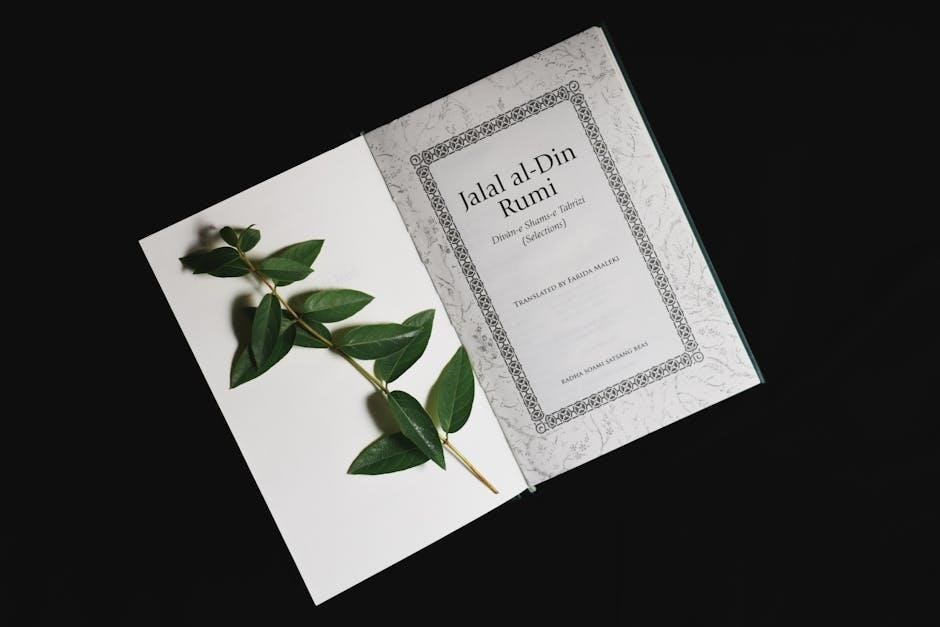
If your printed copy of “The Guest House” by Rumi appears faded, blurry, or pixelated, adjusting your printer settings is crucial. Begin by accessing your printer’s properties through your operating system’s control panel. Locate the “Quality” or “Resolution” settings and select a higher DPI (dots per inch) value – 300 DPI is generally excellent for text and images.
Next, examine the “Paper Type” setting. Ensure it’s correctly configured for the paper you’re using (e.g., plain paper, glossy photo paper). Incorrect paper type settings can significantly impact print quality. Also, check the “Color Management” settings; if printing in color, ensure the correct color profile is selected.
Within the PDF reader’s print dialog, look for options like “Print as Image” or “Smooth Text.” These can sometimes improve the rendering of text and graphics. Finally, run a printer head cleaning cycle – accumulated dust or dried ink can cause poor print quality. Experiment with these settings to achieve optimal results.
Paper Jams and Other Printer Problems
Unexpected printer issues can disrupt printing Rumi’s poem. Gently remove jammed paper, check ink levels, and restart the printer for a smooth experience.

Resources for Further Rumi Exploration
Delve deeper into the world of Rumi with these excellent resources. Coleman Barks’ translations are widely accessible and beautifully capture the essence of Rumi’s work, offering a modern interpretation. For a more scholarly approach, consider Reynold A. Nicholson’s complete translation of the Masnavi, a cornerstone of Sufi literature.
Explore online communities dedicated to Rumi’s poetry, such as the Rumi Network (https://www.ruminetwork.org/), which provides articles, forums, and events. The Mevlana Institute (https://www.mevlana.org/) offers insights into Rumi’s life and teachings from a Sufi perspective.
Further study of Sufi poetry will enrich your understanding of Rumi’s context. Hafiz, another celebrated Persian poet, shares similar themes of divine love and mystical experience. Investigate the works of Attar, whose Conference of the Birds profoundly influenced Rumi. Understanding the historical and spiritual background enhances appreciation for the depth and beauty of Rumi’s verses, extending beyond simply enjoying a free printable poem.
Recommended Books by Rumi

To truly immerse yourself in Rumi’s world, exploring his collected works is essential. The Essential Rumi, translated by Coleman Barks, is a popular starting point, offering a curated selection of his most beloved poems, including “The Guest House.” This compilation beautifully conveys Rumi’s message of love, loss, and spiritual awakening.
For a more comprehensive experience, consider Rumi: Bridge to the Soul, edited by Coleman Barks. It presents a wider range of Rumi’s poetry, categorized by themes, allowing for deeper exploration. The Masnavi: Book One, translated by Reynold A. Nicholson, provides a scholarly yet accessible introduction to Rumi’s magnum opus, a six-volume poetic masterpiece.
Beyond these core texts, A Year with Rumi offers a daily dose of inspiration, presenting a poem for each day of the year. These books, while requiring purchase, offer a richer experience than solely relying on a free printable PDF, allowing for a sustained and profound connection with Rumi’s timeless wisdom.
Online Communities and Websites
Numerous online resources cater to Rumi enthusiasts, fostering discussion and providing deeper insights into his poetry. The Rumi Network (https://www.ruminetwork.org/) is a comprehensive website offering poems, articles, and a calendar of events related to Rumi and Sufism. It’s a fantastic hub for connecting with fellow admirers.
Forums and social media groups dedicated to Rumi abound. Searching on platforms like Facebook and Reddit will reveal active communities where individuals share interpretations, translations, and personal reflections on his work, including “The Guest House.” These spaces offer opportunities for engaging in meaningful dialogue.
Websites like Poetry Foundation (https://www.poetryfoundation.org/poets/rumi) and AllPoetry (https://allpoetry.com/rumi) host collections of Rumi’s poems, often with accompanying analyses. While these sites don’t specifically focus on free printables, they provide valuable context and alternative versions of the text. Remember to verify translations!
Further Study of Sufi Poetry
To truly appreciate Rumi’s “The Guest House,” delving into the broader landscape of Sufi poetry is immensely rewarding. Hafiz, another Persian lyrical poet, offers similarly ecstatic and mystical verses, often exploring themes of divine love and intoxication. His works, translated by numerous scholars, provide a complementary perspective.
Exploring the poetry of Sanai, a predecessor to Rumi, reveals the historical roots of many Sufi concepts. Sanai’s The Garden of Truth is a foundational text, influencing Rumi’s own spiritual and poetic development. Understanding this lineage enriches the reading of “The Guest House.”
Academic study of Sufism itself provides crucial context. Books by scholars like Annemarie Schimmel and Seyyed Hossein Nasr offer detailed analyses of Sufi philosophy, practices, and symbolism. This deeper understanding illuminates the allegorical layers within Rumi’s poetry and the profound wisdom embedded in its seemingly simple verses. Consider exploring translations with scholarly introductions for enhanced comprehension.